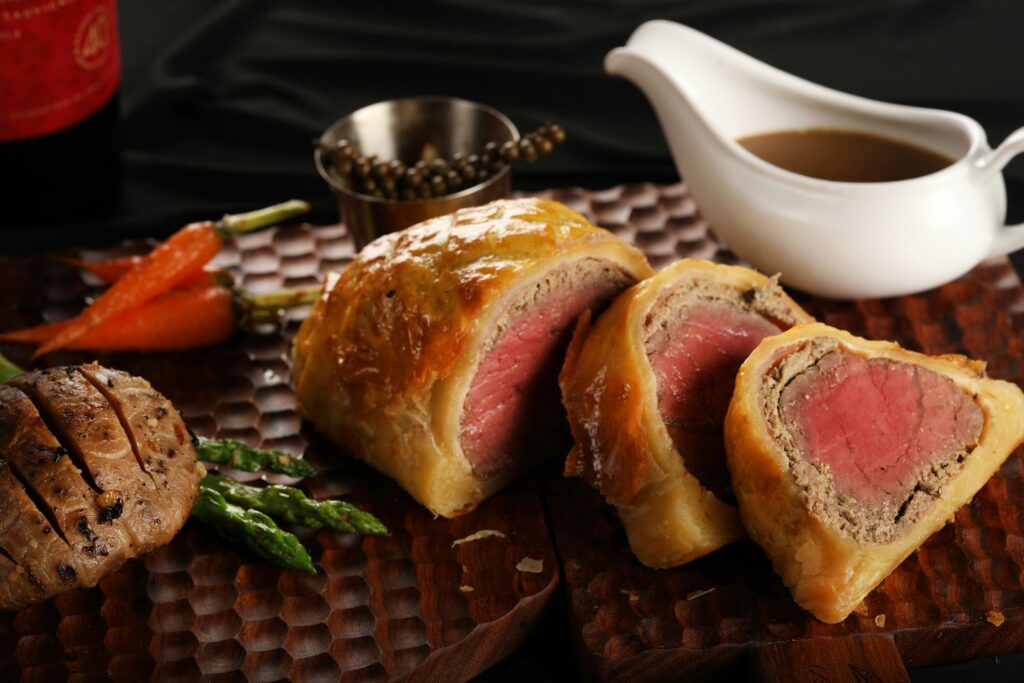
Beef Wellington is far more than just a meat dish. With roots in military triumph, aristocratic dining, and European culinary finesse, it stands as a proud symbol of British cuisine. Whether it originated from battlefield glory or French kitchen artistry, the dish carries with it a rich legacy that continues to evolve in the finest restaurants of the UK today.
The Origin and Name of Beef Wellington

There are two main theories regarding the origin of Beef Wellington. The first links the dish to Arthur Wellesley, the 1st Duke of Wellington, celebrated for his victory at the Battle of Waterloo in 1815. According to this theory, the dish was created to honor him, possibly because the pastry casing resembled his famously polished boots, or as a tribute to his military triumph.
The second theory suggests that Beef Wellington is simply an English adaptation of the French dish filet de bœuf en croûte—beef filet wrapped in pastry. In the 19th century, it was common for British cooks to rename French dishes as part of a cultural culinary shift that emphasized national pride.
Either way, the dish quickly became associated with prestige, skill, and celebration, particularly within upper-class dining circles.
Why Wrap Beef in Pastry?
The decision to wrap beef in pastry isn’t just about looks—it serves multiple purposes:
- Sealing in flavor: The pastry locks in the meat’s juices, keeping it moist during roasting.
- Creating textural contrast: The crispy outer layer complements the tender beef and soft mushroom duxelles inside.
- Signaling culinary skill: A perfectly executed Wellington is a mark of a skilled chef, making it a show-stopping dish in formal dinners.
Beyond function, the dramatic presentation of Beef Wellington—especially when sliced tableside—adds a theatrical flair to fine dining.
From Royal Tables to Modern Gastronomy
Beef Wellington gained popularity in British aristocratic banquets during the 19th century, symbolizing wealth and sophistication. Its elaborate preparation and luxurious ingredients placed it among the elite dishes served at grand feasts.
In the 20th century, the dish found new life in American haute cuisine, and more recently, British chef Gordon Ramsay has championed Beef Wellington as a modern-day culinary icon. Through television shows, restaurant menus, and online recipes, Ramsay helped reintroduce the dish to younger generations and global food enthusiasts.
Where to Enjoy Beef Wellington in the UK Today
Beef Wellington remains a signature dish in many of the UK’s fine dining establishments, especially in London. It’s not just a historical curiosity—it’s a living part of Britain’s modern food culture.
In London:
- The Ritz London: Classic, luxurious setting. Offers traditional Beef Wellington carved tableside.
- Savoy Grill – Gordon Ramsay: Famous for its signature Beef Wellington for two, often served with a theatrical flair. Also offers Beef Wellington masterclasses.
- Bob Bob Ricard – Soho: Known for its “Press for Champagne” button and upscale Beef Wellington with luxury touches.
- Rules – Covent Garden: The oldest restaurant in London serving classic British dishes, including Beef Wellington.
Outside London:
- Simpsons – Birmingham: Michelin-starred restaurant with seasonal versions of Beef Wellington.
- The Black Bull Inn – Yorkshire Dales: Offers a rustic version made with local beef and bacon jam.
Conclusion
Beef Wellington is more than a dish—it’s a culinary narrative that blends history, technique, and prestige. Whether served in an aristocratic hall, a Michelin-starred restaurant, or a neighborhood gastropub, it remains a timeless representation of British culinary elegance.