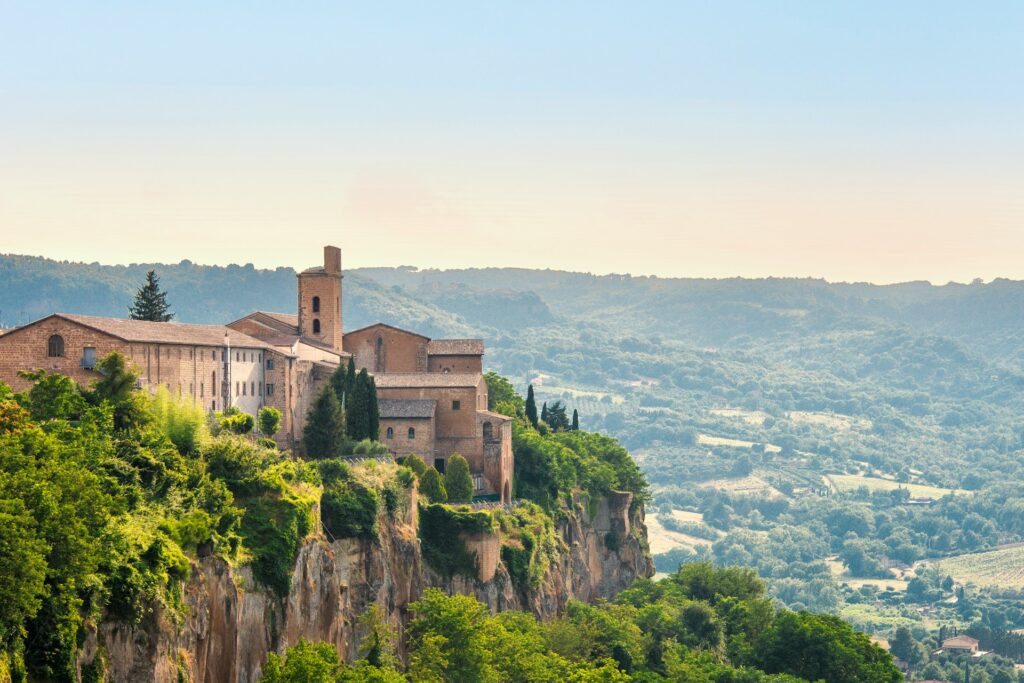
Umbria, the green heart of Italy, is a landlocked region tucked between Tuscany and Lazio. Known for its spiritual roots and agrarian soul, this quiet province offers a deeply authentic slice of Italian life.
From Forests to Faith: A Journey Through Umbria
In this episode, Stanley Tucci journeys through the forests and hill towns of Umbria—a region where food, faith, and the land are intertwined. Unlike the glitz of Florence or the buzz of Rome, Umbria is defined by its monastic calm, medieval villages, and earthy ingredients like black truffles, and wild mushrooms. Tucci visits Norcia, famous for its cured meats and truffle culture; Assisi, a spiritual center anchored by Saint Francis; and Spoleto, a city where family recipes are passed down like sacred texts. Throughout the episode, he uncovers how simplicity, humility, and religious tradition have helped preserve Umbria’s rich yet understated cuisine.
Bites of Umbria: What Tucci Eats
The Fat of the Land
In Montefalco, raising pigs is a long-standing tradition rooted in rural practicality and a deep respect for whole-animal cooking. Pork is more than a staple here—it’s a cultural cornerstone.
Places & Dishes:
• Maialino – Chef “Big Giorgione” prepares maialino (suckling pig) in porchetta style, slow-roasted in a wood-fired oven at Giorgione’s kitchen. As Tucci tastes it, he declares, “I surrender to the pork.”
All God’s Creatures
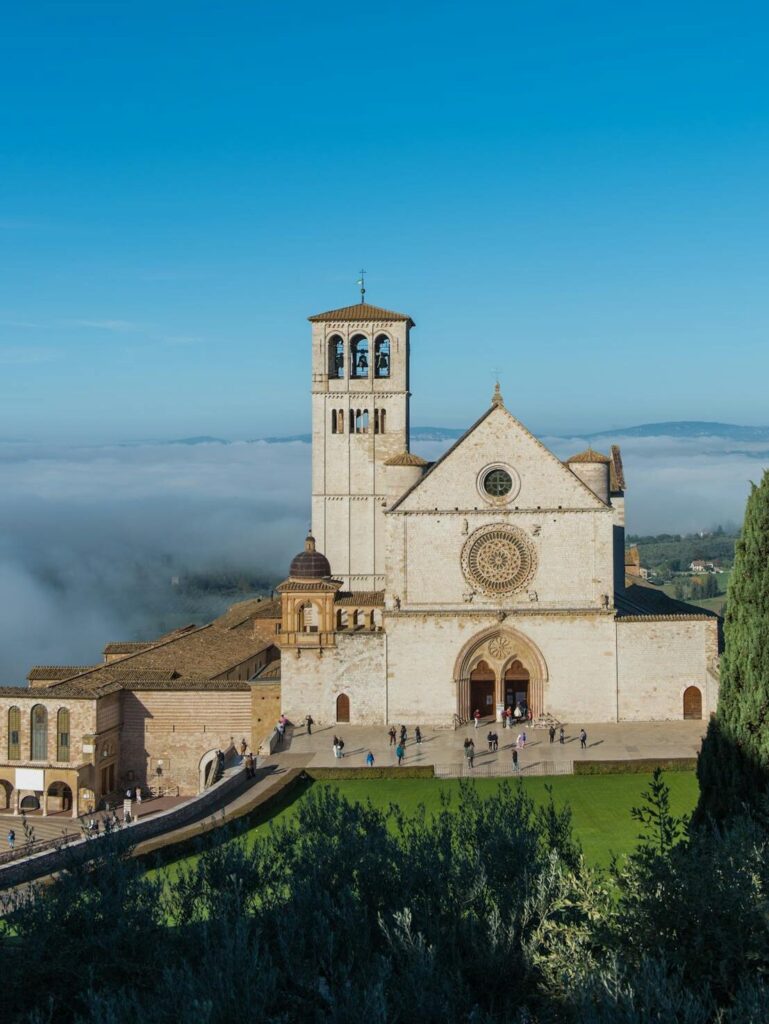
Faith plays a central role in Umbrian cuisine. In Assisi, Tucci visits the Basilica of Saint Francis of Assisi, a place he fondly remembers from a childhood visit with his father. Reflecting on the Franciscan values of humility and gratitude, he explores how these spiritual ideals shape the region’s cultural identity.
Places & Dishes:
• Basilica of Saint Francis of Assisi – Tucci revisits the basilica he first saw as a 12-year-old on a trip with his parents
Where the Wild Things Are
Tucci joins Claudia, a lifelong wild boar hunter, and her hunting team in the Umbrian woods. Boar hunting here is both cultural tradition and ecological necessity, aimed at controlling a growing boar population that damages crops and forests . Claudia has hunted since childhood and leads the group tracking these powerful animals through the forest.
Places & Dishes:
• Wild Boar Ragu – Claudia’s mother prepares a rich and comforting wild boar ragu over homemade pappardelle, using Claudia’s freshly hunted boar. The meal is hearty, satisfying, and deeply tied to family and land traditions
Noble Butchers
The Norcini of Norcia carry centuries of tradition in carving and preserving pork. Tucci learns firsthand how these artisans balance respect for the animal with inventive recipes that highlight local terroir and mountain pastures.
Places & Dishes:
• Brancaleone da Norcia – Tucci tastes salsiccia made from pork leg and even donkey’s testicles, calling it “literally some of the best…” as he savors the flavors shaped by the mountain air and wild herbs.
• Traditional sausage factory run by Maestro Peppe(Norcineria Ansuini Brothers Mastro Peppe) – Tucci tours the workshop where Peppe continues the heritage but laments that few young people choose the demanding life of a Norcino, echoing Peppe’s concern about preserving this craft.
Black Gold
Black truffles are the crown jewel of Umbrian cuisine. While many still forage for them in the wild, Tucci learns they can also be cultivated on specialized plantations. Their woody, nutty, and luxurious flavor makes them one of the most treasured ingredients in Italian cooking. At a truffle farm, he witnesses the care and precision required to grow these culinary gems.
Places & Dishes:
• San Pietro a Pettine – Tucci visits this truffle plantation owned by Carlo Caporicci, who shows him how black truffles are cultivated using oak trees and carefully tended soil.
• Tartufo pasta at San Pietro a Pettine – At the farm’s restaurant, run by Carlo’s daughter Alice, Tucci enjoys a luxurious pasta dish made with finely ground truffles and mushrooms over a layer of beet cream, topped with a generous shaving of fresh black truffle.
Salt in the Wound
In Perugia—another key Umbrian town—people famously stopped salting bread in protest of a heavy salt tax imposed by Pope Paul III in 1540, part of the so-called “Salt War.” Since salt was crucial for preserving salami and prosciutto, this tax deeply affected local food traditions. The result: a clever culinary workaround—unsalted bread—that remains a hallmark of Umbrian simplicity .
Places & Dishes:
• Perugina Chocolate Shop – Founded in 1907, this iconic chocolatier is beloved for its Baci: hazelnut-centered dark chocolates wrapped with love notes and a signature silver-blue packaging .
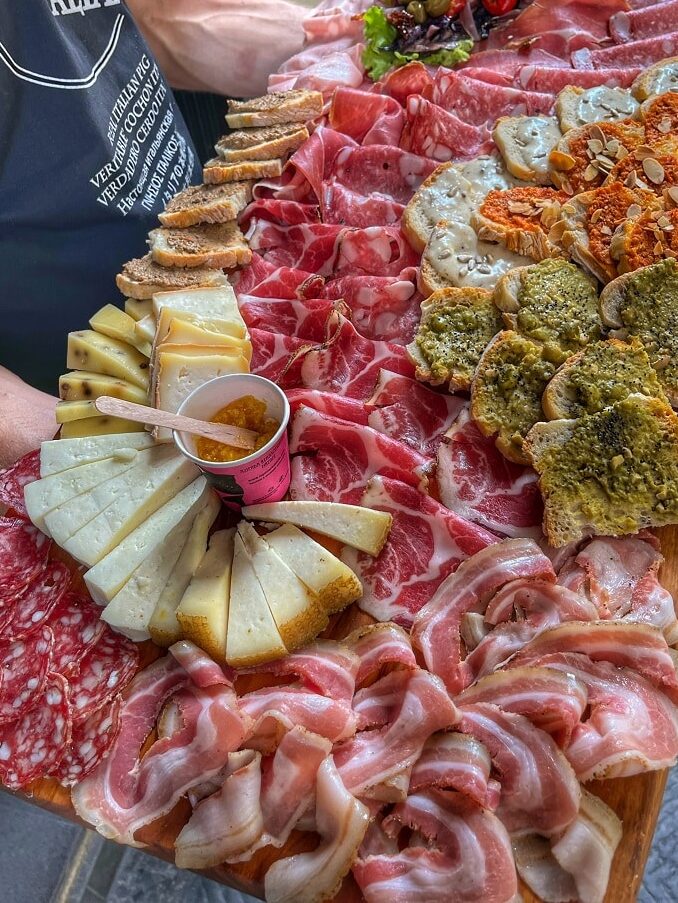
• La Prosciutteria – A vibrant, traditional–yet–young charcuterie spot where staff in their 30s craft salami, porchetta, and local cured meats, blending old-world techniques with youthful energy
Something Old, Something New
In this segment, Tucci departs from the hilltops of Orvieto, a volcanic-tuff town perched high above Umbria’s valleys. Orvieto is accessible by a historic funicular from the railway station. Beneath its medieval streets lies a maze of Etruscan-era tunnels, and the town’s geography has shaped both its history and cuisine.
Places & Dishes:
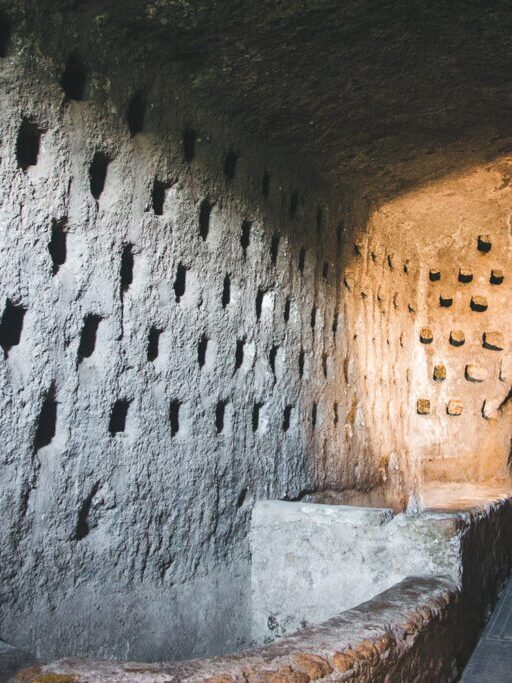
• Orvieto Underground (Labyrinth of tunnels and caves) – Tucci explores the subterranean network carved out since Etruscan times. He notices pigeon roosting niches in the stone walls—historically used to farm birds that supplied meat for locals.
• Capitano del Popolo (run by Chef Valentina Santanicchio) – Here, Tucci and Chef Valentina taste dishes made with pigeon, prepared fresh from the caves. The restaurant blends traditional Umbrian flavors with a youthful energy and modern techniques.
Back to the Garden
Tucci visits Città della Pieve, perched on Umbria’s border with Tuscany, where he explores the regenerative farm Quintosapore. The farm is run by twin brothers. They grow flavorful, resilient vegetables. Their approach, called agriencura, blends agriculture (agricoltura) and care(cura).
Places & Dishes:
• Quintosapore Farm – Operated by twin brothers who focus on breeding heirloom and climate-resistant seed varieties. Their approach centers on sustainability, biodiversity, and a deep connection to the land.
• Farm Kitchen – Tucci enjoys eggplant caviar and freshly made pasta, both prepared on-site with vegetables harvested just moments before serving.
Beyond the Plate: Reflections on Umbria
When we think of Italy, our minds often drift to the coasts—sun-drenched terraces, sparkling seas, and seafood dressed in olive oil and lemon. Before this episode, I rarely considered what life—and food—looked like inland. But Umbria, with its mountains, forests, and deep valleys, revealed an entirely different soul.
Here, traditions are not just preserved—they’re evolved. In the shadow of the hills, people raise pigeons in ancient stone caves, hunt wild boar through thick forests, and cure salami not for show, but for survival. It’s a place where the land dictates the menu, and where hardship has shaped both cuisine and character.
The farmers and butchers, the foragers and hunters—they don’t merely live off the land, they collaborate with it. They breed vegetables strong enough to withstand climate shifts, yet flavorful enough to nourish a future. In Umbria, strength isn’t declared—it’s grown, cured, harvested, and passed down.
This is a region that cherishes the past while fearlessly reimagining what comes next. The “Green Heart of Italy” is more than just a poetic nickname. It’s a truth that pulses through every plate, every field, every story. And after this journey, I know one thing for sure: Umbria is impossible not to love.
Next Episode Tease
Next up: Tucci travels to London, where Italy’s culinary soul finds new life in the kitchens of immigrants—blending heritage, resilience, and reinvention in the heart of Britain.