Stanley Tucci travels inland to Piedmont, the historic heart of Italy’s unification, to explore a region defined by slowness, tradition, rich food, and luxurious truffles.
Alpine Elegance: A Land of Kings and Truffles
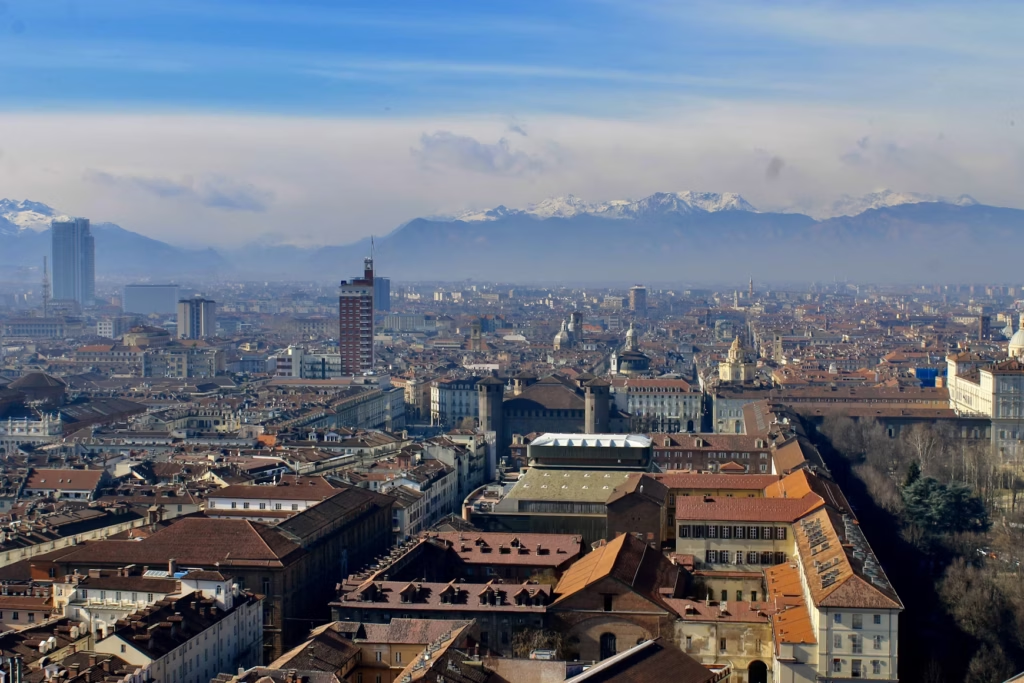
Piedmont is often called the birthplace of modern Italy, and Turin—its capital—is steeped in national history. Once the royal seat of the House of Savoy, Turin is a city of chocolate, coffee, and aristocratic charm. Bra is home to the Slow Food movement, and nearby Alba is world-famous for its prized white truffles.
Bites of Piedmont: What Tucci Eats
Revolutionary Fuel
In Turin, Tucci samples gianduja and the signature bicerin drink—two energy-packed indulgences born from wartime creativity and now cornerstones of the city’s culinary identity.
Places & Dishes:
- Caffè Al Bicerin – A historic café where Tucci enjoys the signature drink in an old-world setting. The bicerin is served in layers of coffee, chocolate, and cream, traditionally sipped without stirring to preserve its distinct flavors.
- Ristorante Del Cambio – Serving the traditional Piedmontese dish finanziera (a hearty stew made from veal brain, spinal cord, and testicles), this restaurant highlights the region’s humble roots. Founded in 1757, it was a favorite of Camillo Benso, Count of Cavour.
Go With The Slow
In Bra, Tucci explores the roots of the Slow Food movement, which began in the 1980s in response to fast food. Its philosophy continues today at the University of Gastronomic Sciences, a school dedicated to preserving traditional food culture.
Places & Dishes:
- University of Gastronomic Sciences – A pioneering academic institution founded by the Slow Food movement, offering programs that celebrate and research traditional food cultures, including regional specialties like olive oil and wine.
- Piola de Celso – Serves bagna càuda, a warm dipping sauce made from garlic, anchovies, olive oil, and butter. Once a humble meal for Piedmont’s poor, it’s now a celebrated symbol of the region’s rustic culinary heritage.
Great Grains
The town of Vercelli is Italy’s rice capital, and risotto is a staple of Piedmontese cuisine—rich, creamy, and as deeply rooted in tradition as pasta.
Places & Dishes:
- Christian & Manuel – Located inside Hotel Cinzia (established in 1967), this restaurant by the Costardi brothers reinvents risotto with unexpected ingredients like coffee and beer reduction. Tucci samples a dish here and exclaims, “That’s a revelation.”
Follow Your Nose
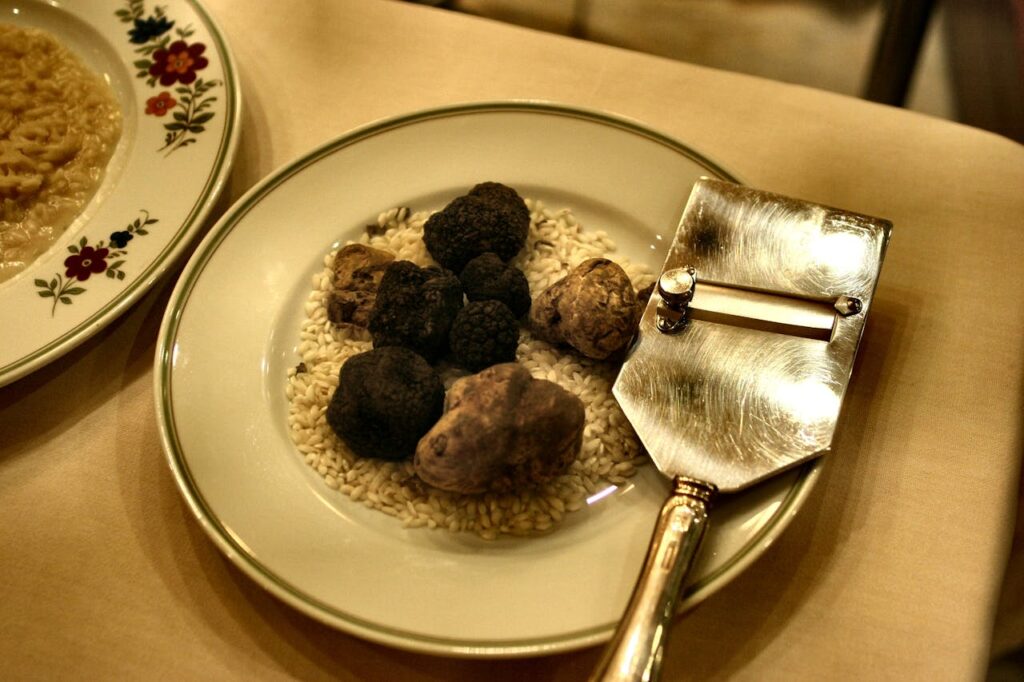
Tucci travels to the Langhe region and joins truffle hunter Igor Bianchi and his dogs for a white truffle hunt. The area’s mineral-rich soil, nourished by summer rainfall, creates the perfect environment for wild white truffles to thrive. Unlike black truffles, which can be cultivated, white truffles cannot be farmed—making them even more rare and prized.
Places & Dishes:
- Igor Bianchi’s Home Kitchen – After the hunt, Igor prepares a simple egg dish topped with freshly shaved white truffle. Using only basic ingredients, the dish allows the truffle’s aroma and flavor to shine in its purest form.
On Cloud Wine
While not the main focus of the episode, Piedmont’s Nebbiolo-based wines (like Barolo and Barbaresco) are essential companions to its rich cuisine, adding structure and perfume to every meal—especially when paired with truffle.
Places & Dishes:
- Giulia Negri Winery – Tucci visits this Langhe-based estate where young winemaker Giulia Negri produces celebrated Barolo exclusively from Nebbiolo grapes, blending innovation with deep regional tradition.
Say Fromage
This segment takes us to Valle d’Aosta, the northernmost part of Piedmont bordering France and Switzerland, where three languages are spoken and alpine cheese traditions thrive.
Places & Dishes:
- Alpage – Tucci visits this cheese shop specializing in regional alpine cheeses including aged Fontina and Robiola, showcasing the mountain dairy heritage of northern Italy.
- Cervino Ski Paradise – Tucci rides a scenic cable car into the Alps near Cervinia, taking in panoramic views of the Valle d’Aosta region.
- Rifugio – At the summit, Tucci visits a rustic mountain lodge where he sips Genepì, a traditional alpine herbal liqueur known for its floral aroma and digestive qualities.
Beyond the Plate: Reflections on Piedmont
A few years ago, I paid over $1,000 for a white truffle tasting menu at a French restaurant in California. Back then, I thought, “Well, white truffles are always expensive.” The meal was exquisite—worth the price, I told myself. But watching this episode reminded me why they’re so costly. White truffles can’t be farmed; they grow wild, fragile, seasonal. Their rarity demands a premium, but their aroma and flavor command reverence.
What lingered with me most was something Igor the truffle hunter said: there was a time when white truffles were so abundant, people ate them at festivals instead of bread. That idea—luxury being once ordinary—felt both enviable and oddly comforting.
Still, Piedmont is about more than truffles. This is a region that defends its culinary heritage with pride. People here continue to honor their traditions, enjoying humble dishes once rooted in poverty. The foods—risotto rice, alpine cheese, Nebbiolo grapes—are shaped by the land, and in turn, shape the culture.
One last thought: if I ever want to live here, do I need to learn three languages? (Italian, French, and Franco-Provençal?)
Next Episode Tease
Next up: Tucci heads to Umbria—Italy’s green heart—where truffles, wild boar, and monastic traditions shape a cuisine of simplicity and soul.