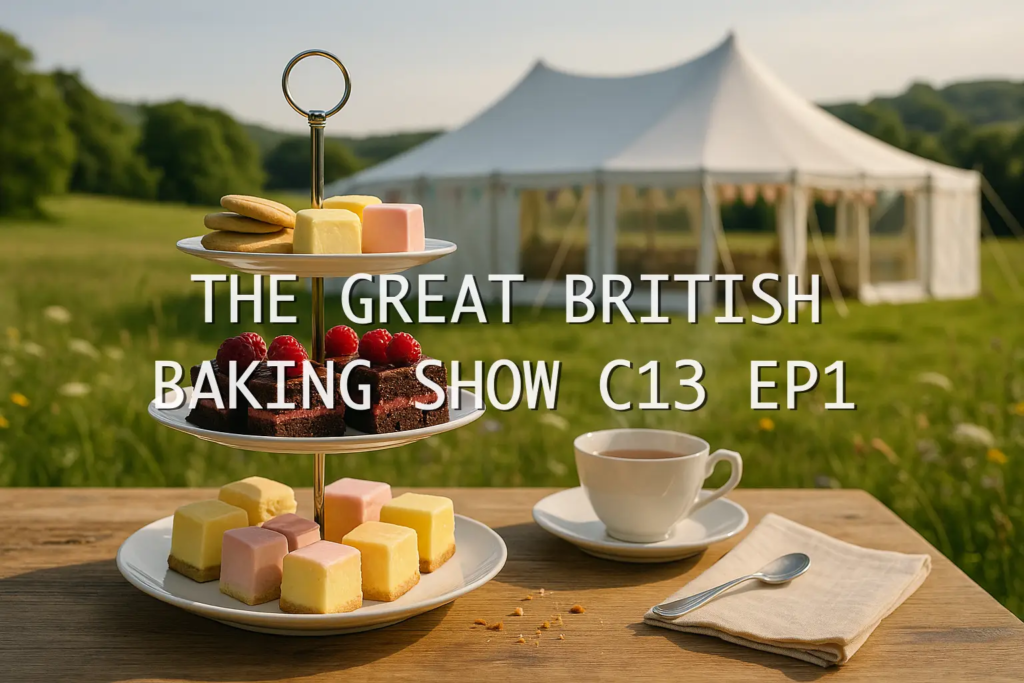
This Week’s Challenges
- Signature: Decorative Swiss roll (patterned rolled sponge)
- Technical: Fondant fancies (9 petite, fondant‑glazed cakes)
- Showstopper: Landscape cake (an edible scene)
🍥 Swiss Roll — History & Where It’s Big
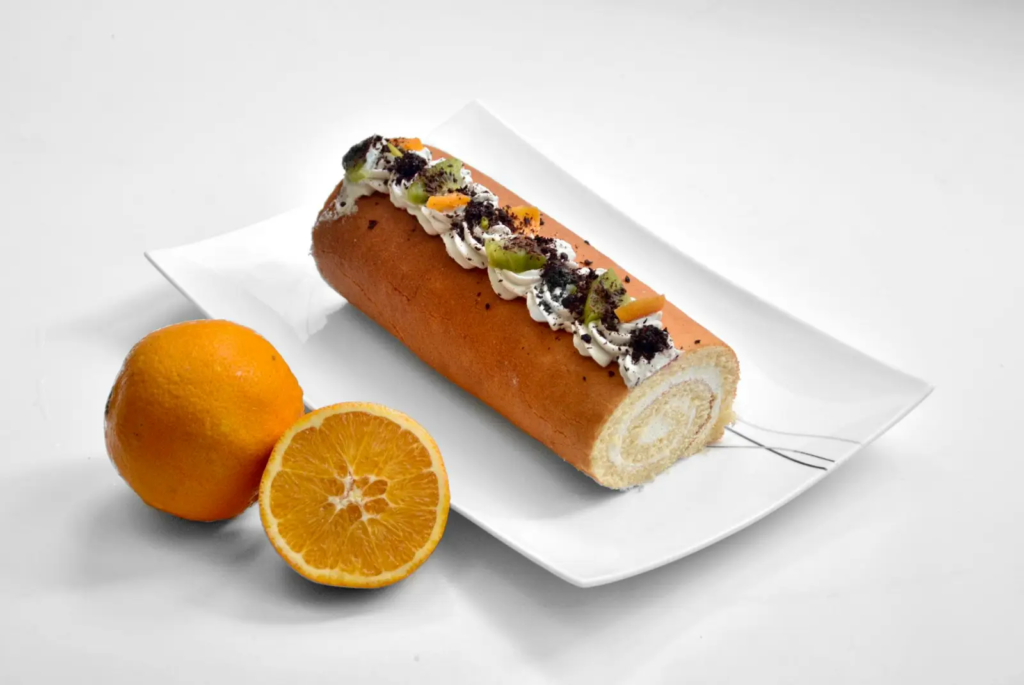
First, the Swiss roll. It rises from 19th‑century Central/Eastern Europe. Bakers whipped eggs hard, kept fat low, rolled while warm, and trapped jam or buttercream inside. The idea traveled fast—Swiss roll, jelly roll, roulade. Today, inlay and patterned sponges turn the spiral into art.
Where it’s big: the UK (tea‑table staple), France (holiday Bûche de Noël line), and Japan (silky cream‑roll cafés).
Did you know? Mid‑1800s cookbooks already describe rolled sponges; bakers dust a tea towel with sugar so the sponge releases cleanly when rolling.
🧁 Fondant Fancies — From Petits Fours to British Tea
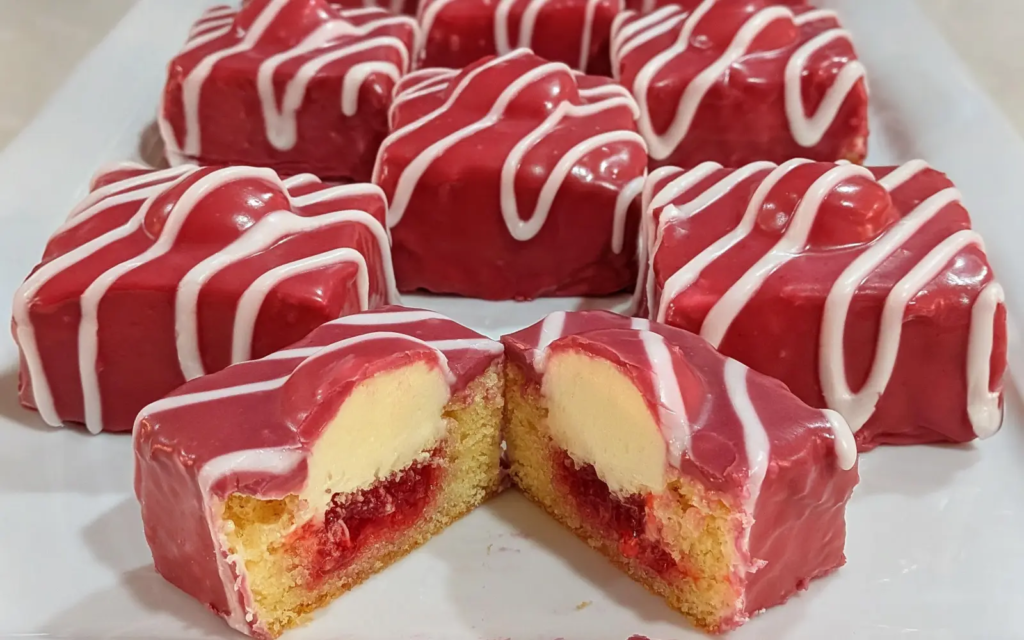
Next, fondant fancies. The technique stems from French petits fours. Then, Britain adopted them for afternoon tea and shaped the style. In 1967, mass‑market “French Fancies” pushed them nationwide. The build stays simple yet fussy: sponge + buttercream dome + pourable fondant. Therefore, precision matters—sharp edges, even coats, and tidy piping.
Where it’s big: the UK (supermarkets and tea rooms). However, the roots remain French.
Did you know? “Petits fours” means “small oven.” Bakers used the oven’s falling heat after bread to dry and finish little sweets.
🏞️ Landscape Cake — Sugarcraft’s Modern Heir
Finally, the landscape cake. It inherits from Victorian celebration and wedding cakes—royal icing, pastillage, and ambitious piping. Today, the brief mixes engineering and storytelling. Bakers build boards and dowels, model edible textures, and paint color that reads across the tent. As a result, structure and finish decide success.
Where it’s big: the UK sugarcraft scene and global competitions.
Did you know? “Royal icing” drew its name from lavish 19th‑century court cakes; its pure‑white finish signaled luxury and skill.
🎯 How the Bakers Fared
Tight spirals, clean fondant, and stable structures stood out. Conversely, cracks, thick glaze, and soft sponges cost time and polish.
🌟 Star Baker & Elimination
- Star Baker: Nataliia. Because she baked cleanly across all rounds. Her Ukraine‑inspired landscape looked striking, held structure, and balanced flavors. Judges praised her precision.
- Eliminated: Hassan. Because he struggled in all three. His Swiss roll failed to set; his Technical ranked low; his Showstopper lacked finish and stability.