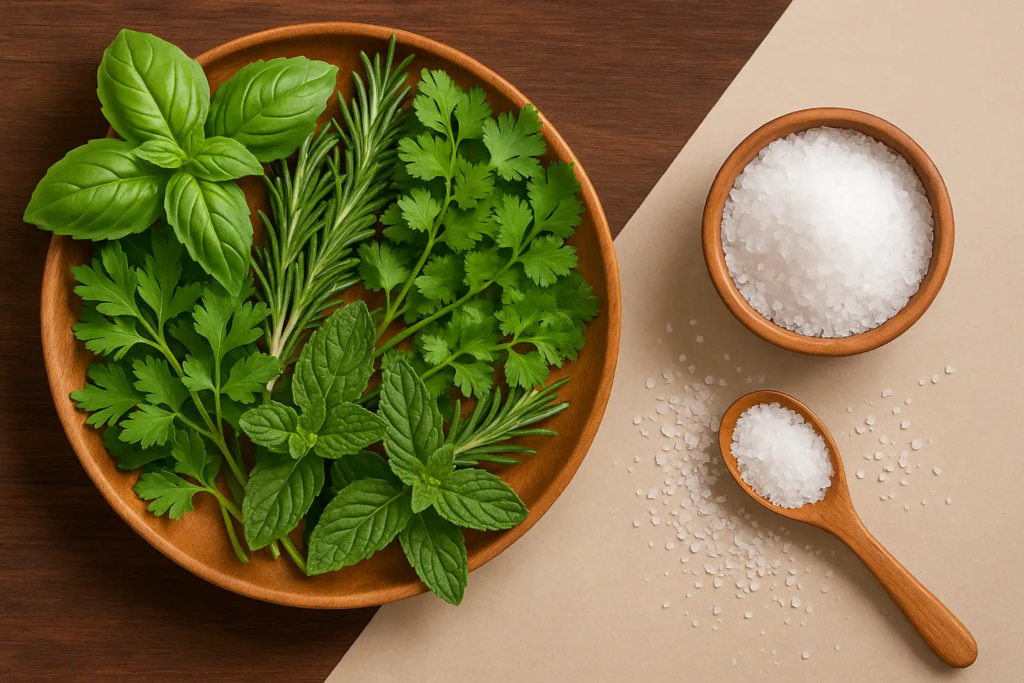
Every year on August 29th, we celebrate More Herbs, Less Salt Day. This day reminds us that eating well doesn’t mean giving up flavor—it means finding smarter, healthier ways to enjoy it.
Why This Day Matters
Most people today consume far more salt than recommended. The World Health Organization advises less than 5 grams of salt per day (about 2,000 mg sodium), but the average intake is often double that amount. Too much salt is linked to high blood pressure, heart disease, and kidney strain.
The idea behind this day is simple: use more herbs to add flavor, and you’ll naturally need less salt.
🧂 What Too Much Salt Does
When you eat more salt than your body needs, it reacts:
- It holds onto water, causing bloating and thirst.
- It can raise blood pressure and put stress on your heart.
- It forces your kidneys to work harder.
- Long-term, it may raise the risk of stomach cancer and chronic disease.
The good news? Small changes—like cooking with herbs—help reduce these risks without sacrificing taste.
🍌 Potassium: Nature’s Balance
Nutrition experts confirm that potassium helps counter sodium. Foods like bananas, spinach, avocados, and potatoes support the body in flushing out extra sodium. Still, this doesn’t erase the problem of excess salt—it works best when paired with lowering sodium in your diet.
Practical wellness tips:
- Drink plenty of water after a salty meal to help your kidneys flush out sodium.
- Add a potassium-rich side, like a banana or a spinach salad, to balance your intake.
- Season with herbs and citrus instead of reaching for more salt.
- Watch packaged foods—many contain hidden sodium even if they don’t taste salty.
🌿 Herbs That Replace Salt
Different herbs bring natural depth and aroma to meals:
- Basil – fresh and sweet, perfect for pasta and salads.
- Rosemary – earthy and bold, ideal for roasted potatoes and chicken.
- Cilantro – bright and citrusy, great in tacos or grain bowls.
- Garlic & Onion Powder – savory flavor without the salt.
- Parsley & Oregano – versatile Mediterranean favorites.
Easy ways to start using herbs instead of salt:
- Add lemon juice + herbs for a salt-free salad dressing.
- Make herb-infused olive oil for bread or roasted vegetables.
- Keep a homemade herb-and-spice blend ready for quick seasoning.
Beyond flavor, herbs often provide antioxidants, digestive benefits, and anti-inflammatory effects.
💬 Final Thought
More Herbs, Less Salt Day is about enjoying food that’s both flavorful and healthy. By reaching for herbs instead of the salt shaker, you protect your heart, kidneys, and long-term well-being—while still savoring every bite. 🌿✨
📚 References
- World Health Organization. (2023). Salt reduction.
- American Heart Association. (2024). Why you should eat less salt.
- Harvard T.H. Chan School of Public Health. (2022). Salt and Sodium.