American biscuits and British scones look like cousins—but they grew up in different kitchens. Here’s the origin story, how they diverged in texture and taste, plus three great places to try them.

Quick Compare
| American Biscuit | British Scone | |
|---|---|---|
| Flavor | Not very sweet; savory-leaning | Lightly sweet; tea-time treat |
| Texture | Flaky layers, soft interior | Tender–crumbly, cake-like |
| Liquid | Buttermilk (or milk + acid) | Milk or cream (often + egg) |
| Method | Minimal mixing + folding for layers | Rub-in butter, just bring together |
| Pairing | Butter, honey, gravy, fried chicken | Jam & clotted cream (cream tea) |
One line: Flaky vs tender—same family, different lives.
Origins, Culture & How We Eat Them
Scones most likely began in Scotland. The word appears in print by 1513. Early scones were griddle-baked bannocks, not oven-baked cakes. In the 19th century, baking powder made scones lighter and helped them settle into British tea culture. That’s where the cream tea ritual comes in: split a warm scone and add jam and clotted cream. The order sparks friendly debate—Cornwall usually goes jam-first, Devon often goes cream-first—but either way the goal is balance: sweet fruit, cool cream, warm crumb.
Biscuits traveled a different road. They came from British quick breads but evolved in the American South when chemical leaveners met soft Southern wheat. Cooks learned to handle dough gently, keep the fat cold, and bake hot and fast. The result: tall, fluffy, layered biscuits that fit Southern tables—breakfast sandwiches, sausage gravy, country ham, fried chicken. Biscuits became an everyday bread, not just a teatime treat.
How They Differ
- Flour & fat: Lower‑protein (lower gluten‑forming) flour helps biscuits stay tender; both rely on cold butter for lift and flavor.
- Liquid: Biscuits love buttermilk for tang and rise. Scones lean cream or milk and a touch of sugar.
- Shaping: Biscuits are folded once or twice for visible layers. Scones are patted and cut into rounds or wedges—no lamination.
- Bake: A hot, well‑preheated oven keeps fat solid until lift happens, then steam does the work.
Where to Try
Mary O’s Irish Soda Bread Shop — New York City
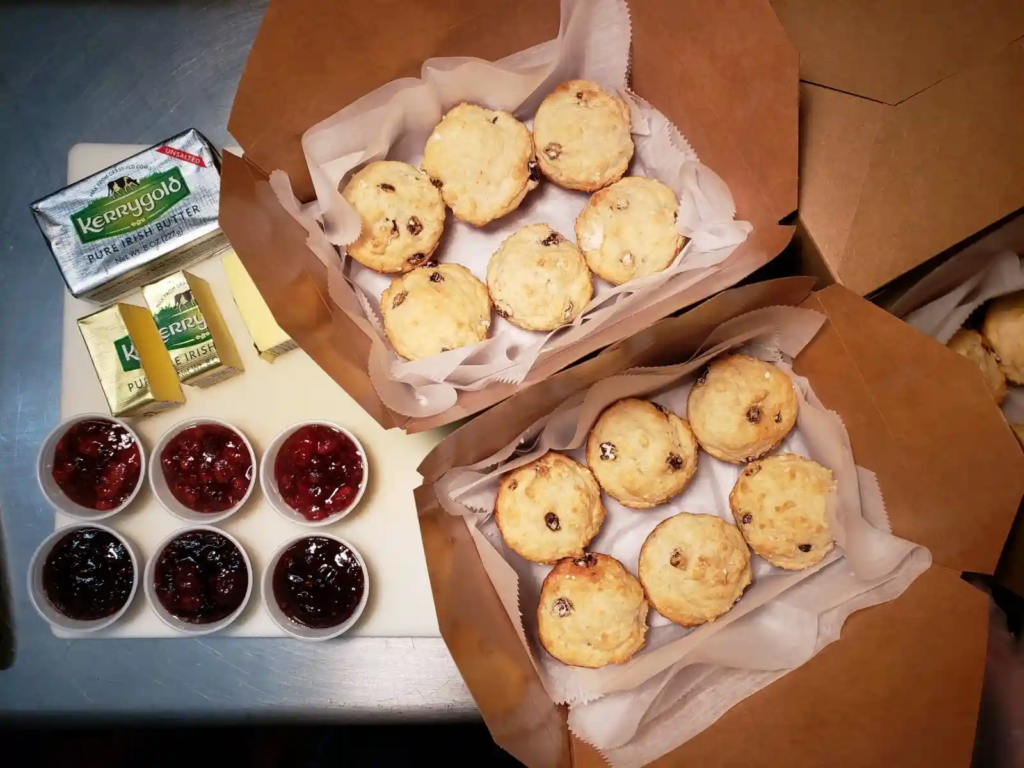
East Village favorite serving warm soda-bread scones with Kerrygold butter and house blackberry jam. Simple, rich, and wildly satisfying—expect a line on weekends.
Loveless Cafe — Nashville, Tennessee
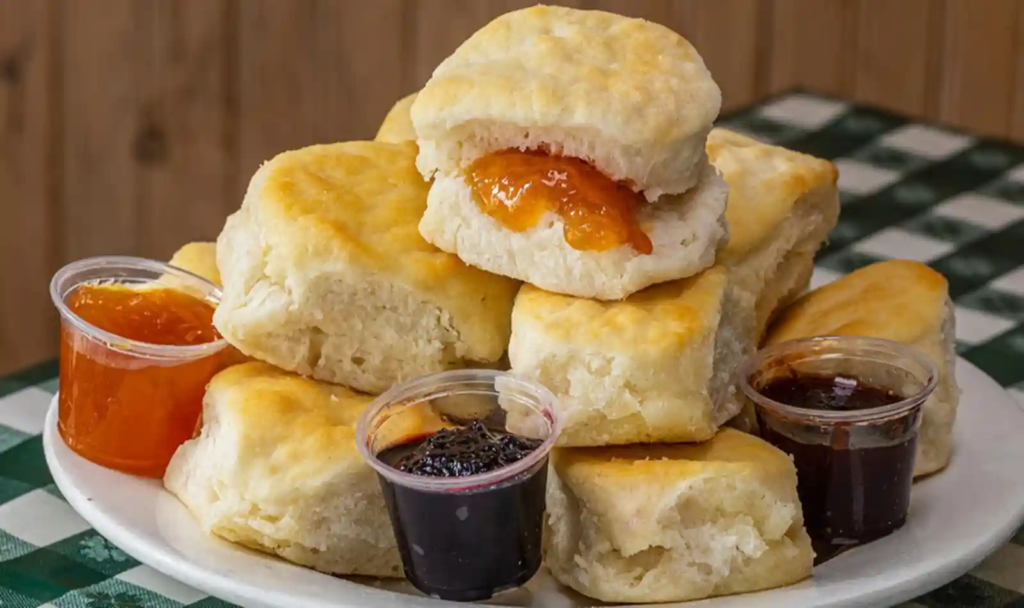
A 1951 landmark for buttermilk biscuits, fruit preserves, and Southern staples. The neon sign, the rocking chairs, the plates that don’t skimp—it’s comfort on a table.
Try Loveless Cafe Biscuit Mix at home
Callie’s Hot Little Biscuit — Charleston, South Carolina
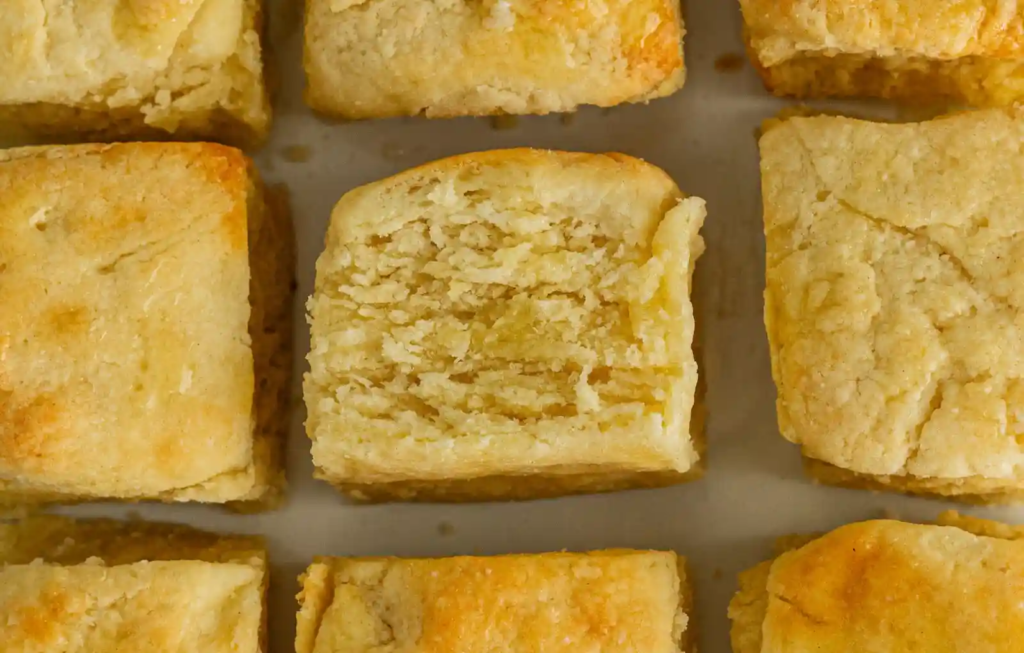
Grab‑and‑go spot for hand‑made biscuits: plain, cheese, or stuffed as breakfast sandwiches. Light, buttery, and perfect with pimento cheese or seasonal jam.
Try Callie’s Hot Little Biscuit Mix at home
Bake at Home
Flaky Buttermilk Biscuits — 8–10 pieces
- All‑purpose flour 250 g (2 cups)
- Baking powder 12 g (1 tbsp), baking soda ½ tsp, salt 1 tsp
- Cold unsalted butter 113 g (½ cup), cubed
- Cold buttermilk 180–240 ml (¾–1 cup)
Method: Cut butter into dry mix → stir in buttermilk just to clump → pat to 1 in / 2.5 cm → fold once or twice → cut. Bake 425 °F / 220 °C, 12–15 min.
Tender Cream Scones — 8 wedges
- All‑purpose flour 250 g (2 cups)
- Baking powder 2 tsp, sugar 50 g (¼ cup), salt ½ tsp
- Cold unsalted butter 60 g
- Heavy cream 150 ml + 1 egg (optional for richer crumb)
Method: Rub in butter → add liquids just to combine → pat 1 in / 2.5 cm → cut or score → brush with cream → bake 400 °F / 200 °C, 12–15 min.
💡 Sweet Tooth’s Tips
- For extra flaky layers, mix 50% cake flour + 50% all‑purpose flour. Cake flour is lower‑protein, so it forms less gluten and keeps layers delicate.
- Pre‑cut the butter into small cubes and freeze them. Measure first, then freeze so you can work fast while the butter stays solid.
- Use a half‑and‑half blend of heavy cream and milk for the liquid. All cream can taste too rich; the blend keeps flavor bright. Keep dairy cold until the moment you mix.
- After cutting and placing on the pan, chill the dough 30–60 minutes before baking. Cold dough + hot oven = better lift and cleaner layers.
Final Bite
Same‑but‑different—that’s the charm of scones and biscuits. They’re beginner‑friendly, yet the best bakes come when you look a little deeper, learn the method, and practice with intention. I love both: that slightly crumbly bite that practically asks for coffee or tea. My style sits between them—lighter like a scone, flaky like a biscuit (see Sweet Tooth’s Tips above). Taking what you love and making it yours is the joy of baking. Start with a simple batch today—scone or biscuit—and let it become yours.
References
- Oxford English Dictionary (OED) — “scone, n.” (earliest usage cited: 1513)
- American Chemical Society — National Historic Chemical Landmarks: Development of Baking Powder
- Smithsonian Magazine: The Great Uprising: How a Powder Revolutionized Baking (2017)
- King Arthur Baking: The rise — a history of American biscuits (2023)
- Serious Eats: The British Cream Tea: Is It Jam or Cream First?
- Food52: We Waited an Hour for NYC’s Viral Irish Soda Bread Scones (2024)
💛 Some links in this post are Amazon affiliate links. If you choose to purchase through them, you’re supporting this blog—thank you so much for being here.