What we love to eat may not be what we think it is.
🍟 Introduction
Crispy, salty, oily, and just a bit sweet—French fries are addictive. But is it because we made them at home and loved them? Probably not.
More likely, it’s because fast food giants have spent decades perfecting how fries look, taste, and make us feel. Their marketing is powerful, and their fries are engineered to hit all the right pleasure points. I’ve watched Michael Pollan’s RSA talk, read his book Cooked, and seen the Netflix documentary too—and all of them made me look at this humble snack a little differently.
In Part 1 of this series, we celebrated the history and joy of French fries. But now, it’s time to peel back the layers and examine the systems behind them.
🍟 Want to know where fries came from? Read French Fries (Part 1): The Golden Origin Story →
Behind the Golden Arches
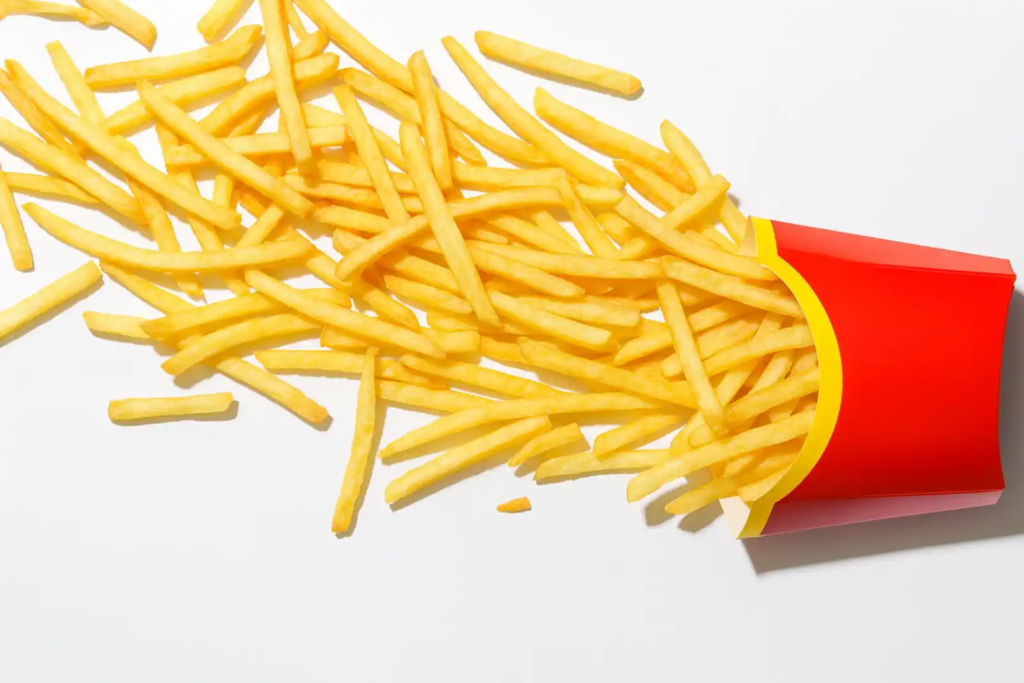
The fries we crave from McDonald’s—those long, golden sticks standing tall in the iconic red carton—aren’t just a happy accident. They’re the result of careful engineering, and it starts with the potato.
To get that perfect shape and color, McDonald’s uses the Russet Burbank, a potato variety known for its size, length, and smooth skin. But this potato is vulnerable—especially to a disease called net necrosis, which causes dark spots that make it unusable by fast food standards.
To meet those strict cosmetic requirements, farmers apply large quantities of pesticides, including Monitor (methamidophos), a powerful systemic insecticide. According to Pollan, the chemical is so toxic that farmers can’t even enter the field for several days after spraying.
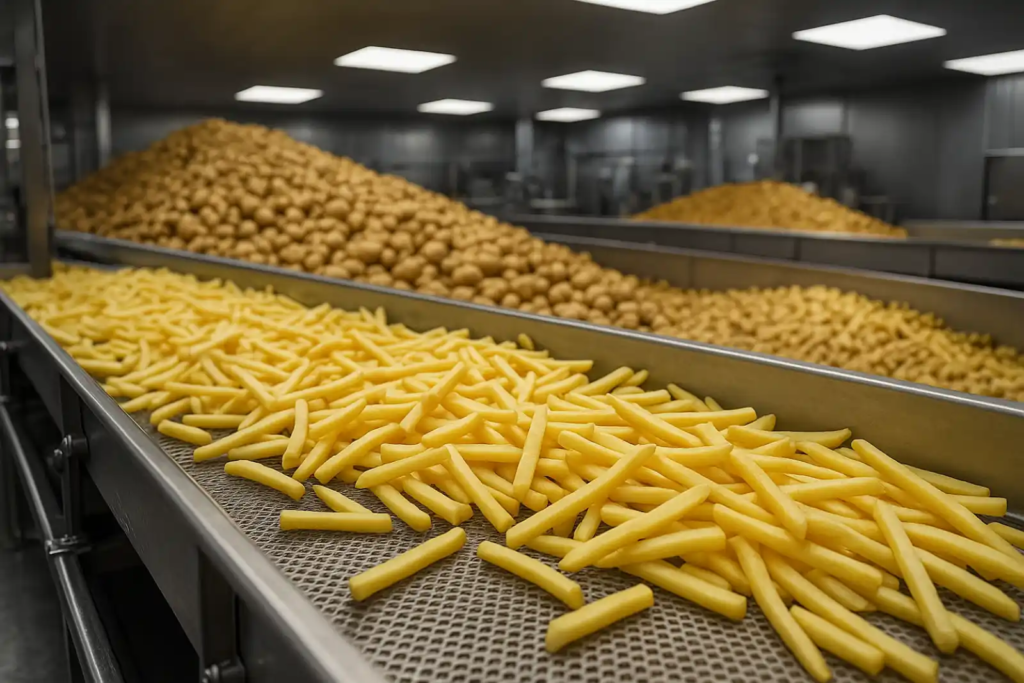
Once harvested, these potatoes aren’t sent straight to the factory. They’re stored in sealed, football-field-sized sheds with powerful ventilation systems for up to six weeks—just to let the chemicals off-gas.
Only then are the potatoes washed, trimmed, and par-fried in oil before being frozen and shipped around the world. To maintain their signature look and taste, they’re treated with dextrose, citric acid, and dimethylpolysiloxane—a carefully calibrated formula to keep every fry consistent.
19 Ingredients in One Fry?
A McDonald’s French fry contains over a dozen ingredients. It’s not just potato, oil, and salt. It’s an engineered product.
Some common ingredients include:
- Potatoes: The base ingredient, but selected for appearance and size, not just taste.
- Vegetable oil (a blend of canola, soybean, hydrogenated oils): Used for frying; hydrogenation helps with shelf stability but may raise health concerns.
- Dextrose (sugar): Applied to maintain consistent golden color after frying.
- Sodium acid pyrophosphate: Prevents potatoes from turning gray after being cut and frozen.
- Natural beef flavor (contains wheat and milk derivatives): Adds a savory, meaty taste—note, it’s not vegetarian.
- Citric acid: Acts as a preservative to extend shelf life.
- Dimethylpolysiloxane: An anti-foaming agent added to frying oil to reduce splatter and improve consistency.
“If it’s just a fry, why does it need a chemist?”
⚠️ Pollan’s Warning
Pollan’s core message? Cooking is power.
When we stop cooking for ourselves, we hand over control—of our nutrition, our choices, even our cultural values—to corporations. His RSA talk ends with a striking point:
“If you cook, you’re reclaiming your health and your independence.”
This isn’t about guilt. It’s about being aware.
🛒 Recommended Tools for Healthier Fries at Home
PrepWorks Tower Fry Cutter – Heavy-Duty Potato Cutter for Perfect Fries
If you want fresh-cut fries at home with clean oil and perfect slices, this tool is for you. Easy to use and easy to clean. Stainless Steel Blades, BPA-Free ⭐️4.4/5 +2,900 reviews
“Works like a charm. I can make restaurant-quality fries in minutes without the mess. Definitely a game changer!”
– Verified Amazon Reviewer
New Star Foodservice 42306 Commercial Grade French Fry Cutter with Suction Feet
For those wanting something more commercial and professional, this heavy-duty cutter is built to last. Great for large batches or frequent fry nights. ⭐️4.5/5 +3,400 reviews
“Sturdy, easy to use, and slices perfectly every time. I wish I had bought this sooner.”
– Verified Amazon Reviewer
304 Stainless Steel Deep Fryer Pot with Basket & Strainer– Dishwasher Safe (68oz/2L)
If you’re looking for the perfect deep pot to fry your fries, this one is an excellent choice. It’s also versatile enough to be used for bacon grease, oil storage, or outdoor cooking. ⭐️4.6/5 +1,800 reviews
“This fryer pot changed my kitchen game. Easy to clean, sturdy, and the basket makes frying so much easier!”
– Verified Amazon Reviewer
Cooked: A Natural History of Transformation by Michael Pollan
If the episode intrigued you, this book is a great next step. It deepens the journey into cooking’s elemental roots—from baking bread to fermenting cheese—with Pollan’s signature insight and storytelling.
⭐ 4.6 / 5 +1,983 reviews
“In Cooked Michael Pollan takes a look at the major processes that go into food preparation… It revitalizes the reader’s interest in our historic food culture and the approachability of it at the individual level.”
– Verified Amazon Reviewer
💬 Final Thoughts
We’ve taken a journey—from crunchy delight to a deeper, more complicated truth. This series isn’t about ruining French fries—I still love them too. But now, I see them differently. That small shift—from mindless munching to intentional eating—can change everything.
Sure, homemade fries might not taste exactly like fast food ones. But they’re real, they’re fresh, and they’re free of additives we can’t even pronounce.
This isn’t about being perfect. It’s about being aware. Even something as simple as a French fry can carry a story. And once we know that story, we can’t un-know it.
Knowing is power.
Understanding what goes into our food isn’t about fear—it’s about freedom. It’s about choosing what we eat, rather than letting someone else choose for us.
Choosing for ourselves—even something as small as how we eat our fries—is a quiet kind of resistance. And small steps like that? They’re never really small.
Because when we understand our food, we can enjoy it more honestly, more deeply—and maybe even more deliciously.
📌 This post reflects personal views based on publicly available information and educational content.
I’m not a scientist—just a curious eater trying to understand the food I love a little better.
💛 Some links in this post are Amazon affiliate links. If you choose to purchase through them, you’re supporting this blog—thank you so much for being here.